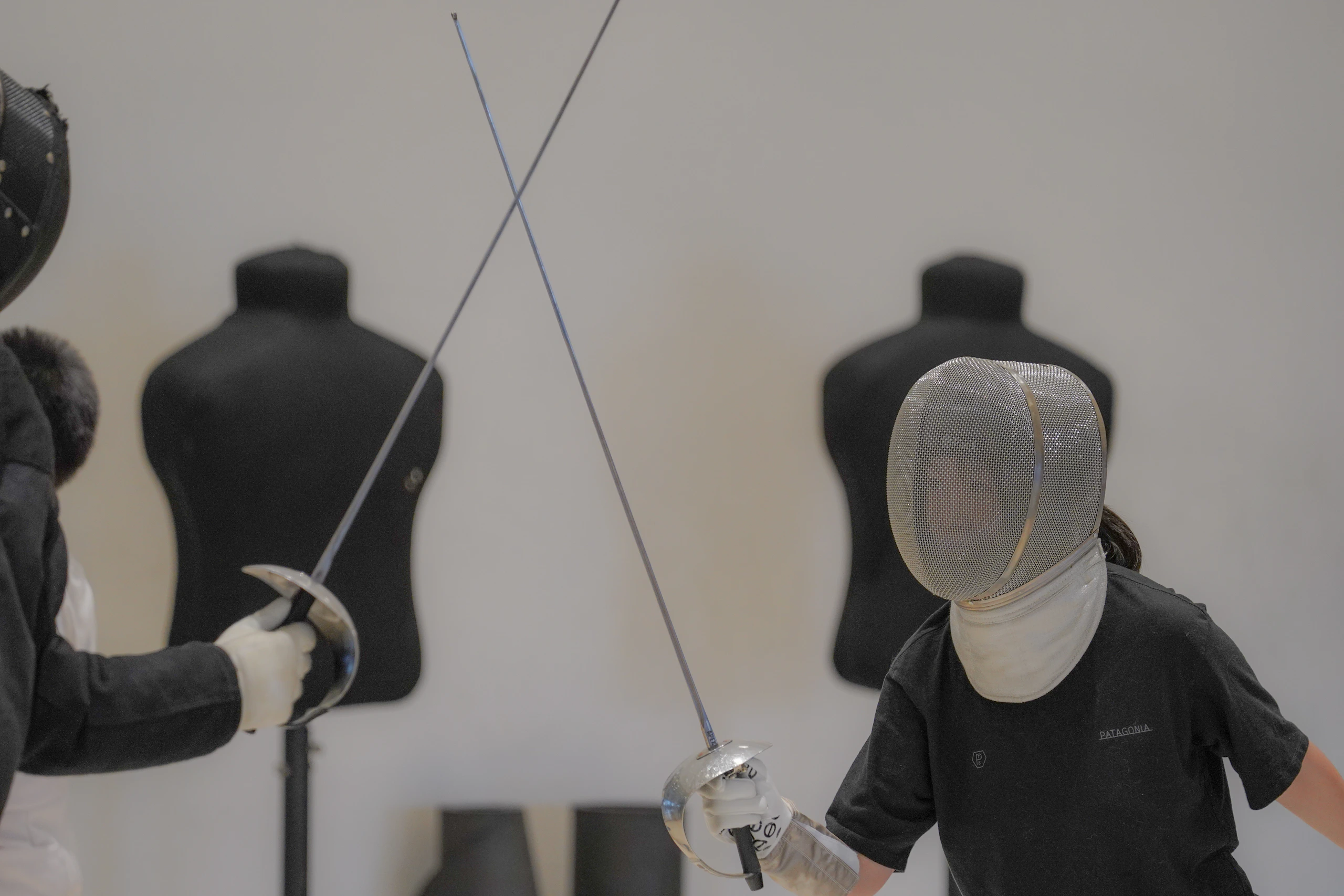
Somewhere, probably on a quiet evening, the thought has settled in: I want to learn sword fighting. Maybe a film. Maybe a book. Maybe a video of two people in protective gear testing a six-hundred-year-old technique against each other at full speed. Whatever the spark, the question that follows is always the same. Where do I actually go? What actually happens?
This is the plain, warm, honest answer. You will find a class near you, you will walk in wearing trainers and a t-shirt, you will leave two hours later with a sword-shaped grin on your face, and you will probably come back the next week. Along the way, here is what to expect.
What a Real Sword Fighting Class Teaches
The phrase "sword fighting class" covers more ground than most people realise. Before you pick one, it helps to know which kind of sword fighting you want to learn, because the answer changes everything.
Historical European Martial Arts (HEMA). Real medieval European sword fighting, reconstructed from fourteenth- and fifteenth-century manuscripts. This is the world of the longsword, the sidesword, the rapier, and the sabre. HEMA classes work directly from historical sources: the Italian master Fiore dei Liberi, the German master Johannes Liechtenauer, the Bolognese school, and their inheritors. The techniques are the same techniques medieval knights used to fight each other in judicial duels. At HEMA Penzance we study Fiore specifically, his complete system of armizare, the art of arms.
Japanese sword arts. Kendo (full-contact sport fencing with bamboo swords), iaido (the art of drawing and cutting), kenjutsu (the older classical samurai arts), and jodo (staff against sword). These are living traditions with unbroken teacher-student lineages going back centuries. A kendo class looks and feels very different from a HEMA class.
Stage combat. Choreographed sword fighting for film, theatre, and performance. Not a martial art, but a skilled craft in its own right, and a respectable one. If what you want is to perform a pirate duel at a wedding or work as a stunt actor, this is your home.
Tourist-style sword experiences. A single afternoon with a blunt weapon and an instructor showing you basic footwork. Fun, memorable, but not an ongoing martial art.
If you are not sure which tradition speaks to you, we have written a friendly map of the Cornish scene that will help. The same logic applies anywhere: work out what you actually want from the art, then find the class that teaches that.
Finding a Class Near You
The honest answer for most readers of this page is that your nearest sword fighting class is probably closer than you think. The HEMA Alliance has a club finder covering most of the world. The British Federation for Historical Swordplay has a UK-focused map. Search HEMA plus your county, or sword fighting club plus your nearest city, and something will almost always turn up.
In Cornwall specifically: HEMA Penzance for Fiore dei Liberi's Italian longsword system, Cornish Sword Kledha Kernewek in Camborne for a broader HEMA offering, Cornwall Kendo Club in Falmouth for kendo, and Myoken Dojo for the classical Japanese arts. Elsewhere in the UK, most major cities have multiple HEMA clubs, and plenty of smaller towns have one.
If your nearest real class is more than an hour's drive, consider the commute seriously. Once a fortnight is still worth it. Nothing you can read, watch, or drill alone will teach you what a teacher can teach you in thirty seconds of in-person correction.
What to Wear to Your First Class
The simplest thing on this page. Comfortable clothing you can move in.
Tracksuit bottoms or gym leggings. A t-shirt. Indoor sport shoes or trainers. Bring a water bottle if you own one. That is the complete dress code for your first HEMA class, and it will be true for the first several months of your training.
What you do not need: a fencing jacket, a plastron, a mask, a sword, a glove, or any other kit. Your first class does not require any of it. Loaner gear covers everything you need to hold while you are learning.
What Actually Happens in the First Hour
A typical HEMA class runs two hours. The first hour is where the art gets taught. A good class follows a pattern like this:
Warm-up. Ten or fifteen minutes of movement. Footwork drills, light cuts at the air, partner stretching. This gets your blood moving and introduces your body to the shapes it will be making for the next two hours.
Technique demonstration. The instructor demonstrates a play from the manuscript. At our club this might be a Posta di Donna cover with a counter-thrust, or one of the disarms from Fiore's nine dagger masters, or the rising parry that flows out of the Iron Door. Whatever the technique, the instructor breaks it down into the mechanics: where your feet go, where your sword travels, what your opponent is doing, where the resolution arrives.
Paired drilling. You pair up with another student and work the technique at whatever speed you are comfortable with. You take turns being the attacker and the defender. The instructor walks the room, correcting as they go. This is the heart of how HEMA is learned: two bodies working out together, over and over, what a six-hundred-year-old piece of writing actually feels like in practice.
Troubleshooting. When your drilling hits a snag (and it will), the instructor comes over, watches for ten seconds, and suggests the one small adjustment that makes the technique start working. This is the hidden value of in-person training that no video can replicate.
By the end of the first hour, you have one or two techniques in your body that you did not have before. That is a real thing you have learned, and you will remember it.
The Second Hour
The second hour varies by club. At HEMA Penzance it usually consists of:
More drilling, for students still building their vocabulary or their sparring kit. There is no pressure to spar early. Plenty of members drill happily for weeks or months before they move to freeplay.
Sparring, for students with full protective gear. Sparring is paired freeplay where you take everything you have been drilling and test it against a partner who is trying to do the same to you. It is intense, rewarding, and entirely voluntary.
Crucially: no one will ask you to spar on your first night. You cannot spar without the full protective kit (mask, gorget, jacket, gloves, forearms, groin protection, etc.) and most beginners build that kit up over several months. Sparring is the reward of training, not the entry point.
What It Costs
Real sword fighting classes are inexpensive. Most UK HEMA clubs charge between £5 and £15 per session, with many offering the first lesson free. HEMA Penzance is £7 per session with the first one free. Some clubs use monthly memberships in the £30-£50 range.
No real sword fighting club charges four-figure joining fees. No real club demands expensive gear before you have started. If you encounter a "sword fighting school" asking for £500 to enrol, walk away. That is not the community HEMA comes from.
Over time, you will spend money on kit (your first sword, a mask, gloves, etc.) as you grow into sparring. The full sparring kit runs to around £600-£1000 across the year or two you build it up. No urgency. You buy piece by piece, as you grow.
What You Will Feel After
The first night you will be sore in muscles you did not know you owned. Holding a longsword in guard for two hours uses shoulders, core, and legs in unfamiliar ways. That soreness is the good kind: your body did something new and interesting, and it will remember.
You will also feel something harder to describe. The first time you deliver a properly mechanical fendente, the descending diagonal cut that Fiore describes as travelling "from the teeth down to the knees," something in your body recognises the movement as correct. Six centuries of martial knowledge arrive through a single, satisfying arc of your arms. It is one of the quiet joys of HEMA, and it will keep you coming back.
Most People Who Come Once Come Back
Real sword fighting is not what the films suggest. It is more intimate, more intellectual, more technical, and ultimately more rewarding than flashy cinematic choreography. It is also more fun.
Most people who walk into a HEMA class for the first time walk back in the following week. The combination of physical challenge, historical depth, and the sheer strangeness of holding a medieval weapon in a twenty-first-century leisure centre is genuinely hard to find elsewhere. By month three, you will have a vocabulary. By month six, the pieces will have started to connect. By year one, you will wonder what you did with your Tuesday evenings before this was in your life.
The path in is just one evening. Tracksuit bottoms, a t-shirt, an open mind, and a club near you with loaner gear waiting.
Come and Learn
If you are anywhere near west Cornwall, HEMA Penzance trains every Tuesday evening, 7pm to 9pm, at Penzance Leisure Centre. Your first lesson is free, all equipment is provided, and no experience is necessary. Come along and see for yourself.
If you are elsewhere, the HEMA Alliance club finder will point you toward the nearest real teacher. The art is worth your time, and the community will welcome you warmly.