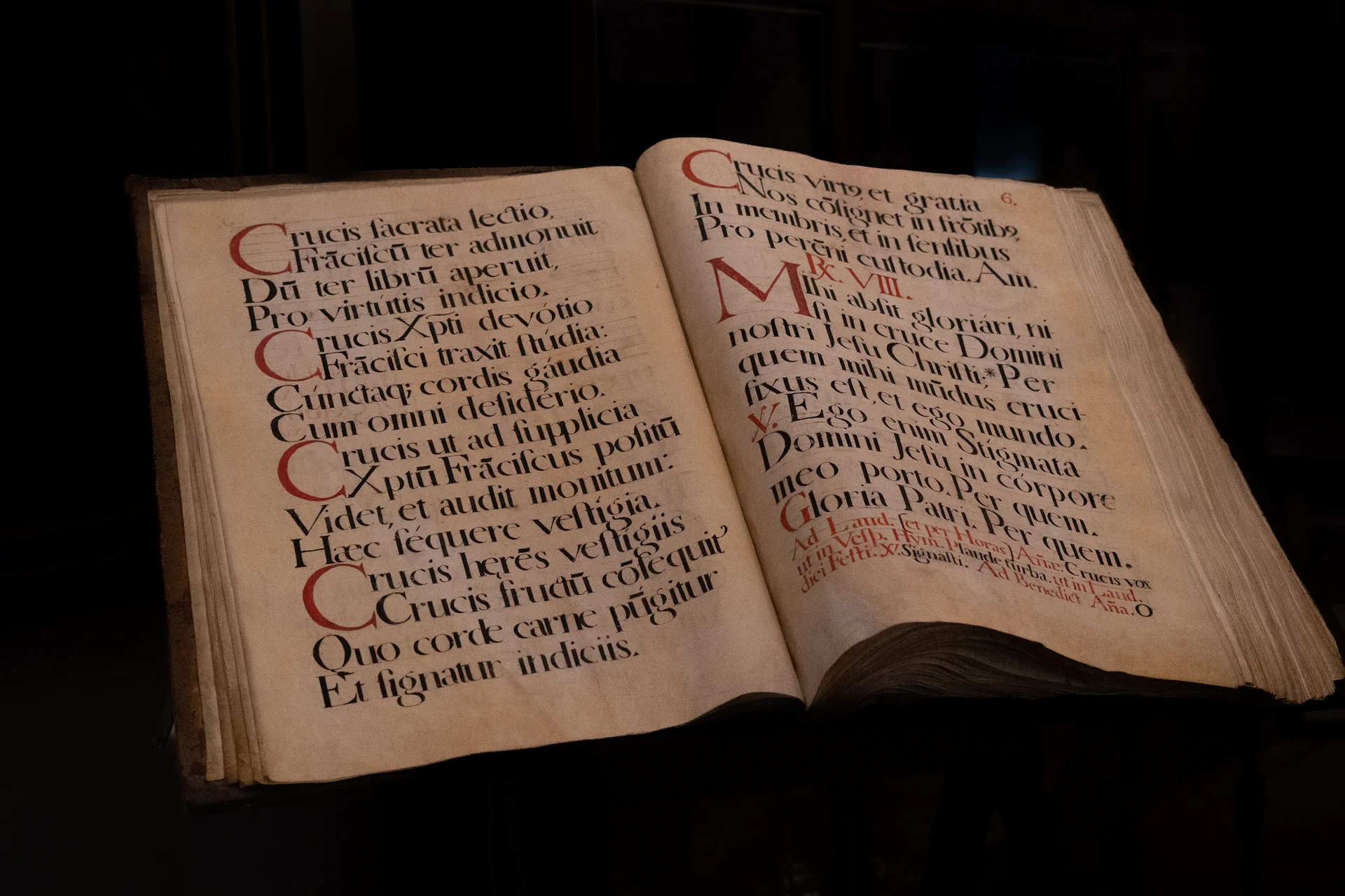
Before the first guard, before the first cut, before you ever set foot on the mat, there is a word. Armizare. Say it aloud and you can hear the Italian of six hundred years ago coming back through your teeth: are-mit-TZAR-ay. Fiore dei Liberi called his life's work l'arte dell'armizare, the art of arms, and he meant every piece of that name.
The modern world has given this art a new label. HEMA. Historical European Martial Arts. It is a useful umbrella, and it includes many beautiful traditions: the German masters of the Liechtenauer lineage, the Bolognese sword and buckler, the rapier of Italy's renaissance, the sabre of Hungary and Poland. Under that umbrella our club has its own rainfall. We study one particular master, one particular tradition, one particular voice. And that voice had a name for itself long before anyone invented an acronym for it.
The Word Itself
Armizare comes from arme, arms. Not the arms that hang from your shoulders, but the weapons a knight would carry to war and to judicial combat. To practise armizare is to practise the arming of a body, the transformation of ordinary human flesh into something able to hold a sword, a spear, a pollaxe, a dagger, and to hold them with purpose. The word admits of no shortcut. You are learning the whole business of being armed.
Fiore himself was the sort of man this word was made for. A knight of the Holy Roman Empire, born in Cividale del Friuli around the middle of the fourteenth century, he fought in the Aquileian War of Succession, trained famous condottieri for their duels, and spent more than forty years in the study of his art. When he finally wrote it down, in the opening years of the 1400s, he produced a book so complete that modern practitioners are still learning from it today.
"I, Fiore, knowing how to read and write and draw and having books about this art which I have studied for a good 40 years and more, even now I am not a perfected master in this art."
Read that again. Forty years. Still not perfect. That is the humility of the word armizare working on the man who invented the label.
What Armizare Contains
Fiore's book, Fior di Battaglia, is not a sword manual with some wrestling at the back. It is a complete system, and it opens with the foundation on which everything else rests.
Abrazare: Grappling
The first section is unarmed. Two men, no weapons, and a library of throws, holds, locks, trips, and submissions. Fiore called this abrazare, the Italian ancestor of the modern word abbracciare, to embrace. Every other section of the book assumes you already know how to move your body around another person's body. You cannot thrust a dagger into armour without understanding how to wrap up an arm. You cannot finish an armoured sword fight without knowing how to take your opponent to the ground. Grappling is not a curiosity tucked into the corner. Grappling is the root from which the whole tree grows.
Daga: The Dagger
Then comes the dagger, and here Fiore gives us something remarkable: nine masters of the dagger, each teaching you a different way to defeat an attack. The rondel dagger, that long spike of medieval life, was the weapon most likely to actually kill you in a dark Italian street or in a breathing-gap of an armoured duel. Fiore's instructions are direct and unsentimental. Cover the strike, close the distance, seize the arm, disarm, counter, finish. No flourishes. No poetry. Just the blunt truth of what a short, sharp blade can do in a small space.
Spada: The Sword
Next, the sword. And because Fiore's world contained many swords and many ways to hold them, this section expands into a whole country of its own: sword in one hand, sword in two hands, sword against dagger, sword in armour. Within the two-handed longsword you find the twelve guards, the seven blows, the zogho largo (wide play) at the edge of distance, and the zogho stretto (narrow play) when blades bind and bodies come close. The longsword is the beating heart of modern Fiore study, and almost every Tuesday evening at HEMA Penzance circles around it.
Azza: The Pollaxe
When two knights met on foot in full plate, neither sword nor wrestling could reliably reach through the armour. They picked up the pollaxe. A hammer at one end, an axe blade at the other, a spike at the top, and a haft long enough to give leverage against a man clad head to toe in steel. Fiore's pollaxe section is the art of the armoured duel made explicit: how to deliver force where armour is thinnest, how to hook and lever a man off his balance, how to bring the fight down into the ground where the dagger finishes what the pollaxe began.
Lanza: The Spear
The spear on foot gets its own short but precise treatment. Five guards and some careful instruction on timing, because the spear reaches first. Most fights with spears end in the first tempo, and the master who understands that lives to meet the next opponent.
A Cavallo: On Horseback
And then Fiore takes you up into the saddle. Lance, sword, spear, grappling, all from horseback. A knight's art is not complete if it stops at the ground, and armizare follows the warrior wherever his work carries him.
The Whole Body of the Art
Add those sections together, and you have something almost no other medieval treatise attempts: a single system covering every weapon a knight might carry, at every range from clinch to cavalry charge, armoured and unarmoured, on foot and mounted.
This is what armizare means. Not fencing with longswords as a hobby. Not sword-sport. The full education of a medieval fighting man, compressed into one beautifully illustrated book, and preserved for us to reopen six centuries later.
Why the Old Name Still Matters
HEMA is a useful word. It tells people roughly what we do. But HEMA is a modern label for a modern community, and it covers many masters whose traditions differ from Fiore's in important ways. The German Liechtenauer tradition has its own logic, its own guards (Ochs, Pflug, vom Tag, Alber), its own poetry in the Zettel. The Bolognese school of the 1500s speaks a later, more renaissance language. The rapier's geometry is a different kind of mathematics altogether.
When we call what we do armizare, we are telling the truth about our lineage. We are students of one particular master, reading one particular book, practising one particular system. Our guards and our cuts are Fiore's guards and Fiore's cuts. Our grappling is abrazare. Our pollaxe is the azza. Our words are his words, because his words fit his art better than any translation could.
This matters because the old names carry the old precision. Posta di Donna is not "the high right shoulder stance." It is the Lady's Guard, the queen of the twelve, able (Fiore himself says) to deliver all seven blows. Dente di Zenghiaro is not "a low hip thrust." It is the Boar's Tooth, and a boar drives its tooth upward and then rakes back down, which is exactly what the guard does. The Italian tells you what the guard is for. The English, if you lose the Italian, tells you only what it looks like.
The Living Art
An art with a six-hundred-year paper trail and a set of illustrated plays could easily become a museum piece. Armizare refuses. Every Tuesday at Penzance Leisure Centre, real people in shirtsleeves pick up real blunt steel and test Fiore's techniques against each other. Plays that survived only as ink on vellum come alive in the hands of a plumber, a student, a grandmother, a teenager, whoever chose to walk through the door that week. The first hour is technique. The second hour is sparring for those with their kit, or more drilling for those still building theirs. The art breathes.
Fiore would understand this. He wrote the book precisely so that the art would not die with him. He named his students by name, in print, so their deeds would be remembered. He drew the plays in careful ink so any sharp-eyed reader could reconstruct them. He trusted that armizare would keep finding people who wanted to arm themselves in his tradition.
Six hundred years later, it still does.
Come and Learn
We practise Fiore's complete system every Tuesday evening at Penzance Leisure Centre, 7pm to 9pm. Your first lesson is free, all equipment is provided, and no experience is necessary. Come along and see for yourself.
Fiore's words in this article are from the Getty manuscript translations at Fight Like Fiore.