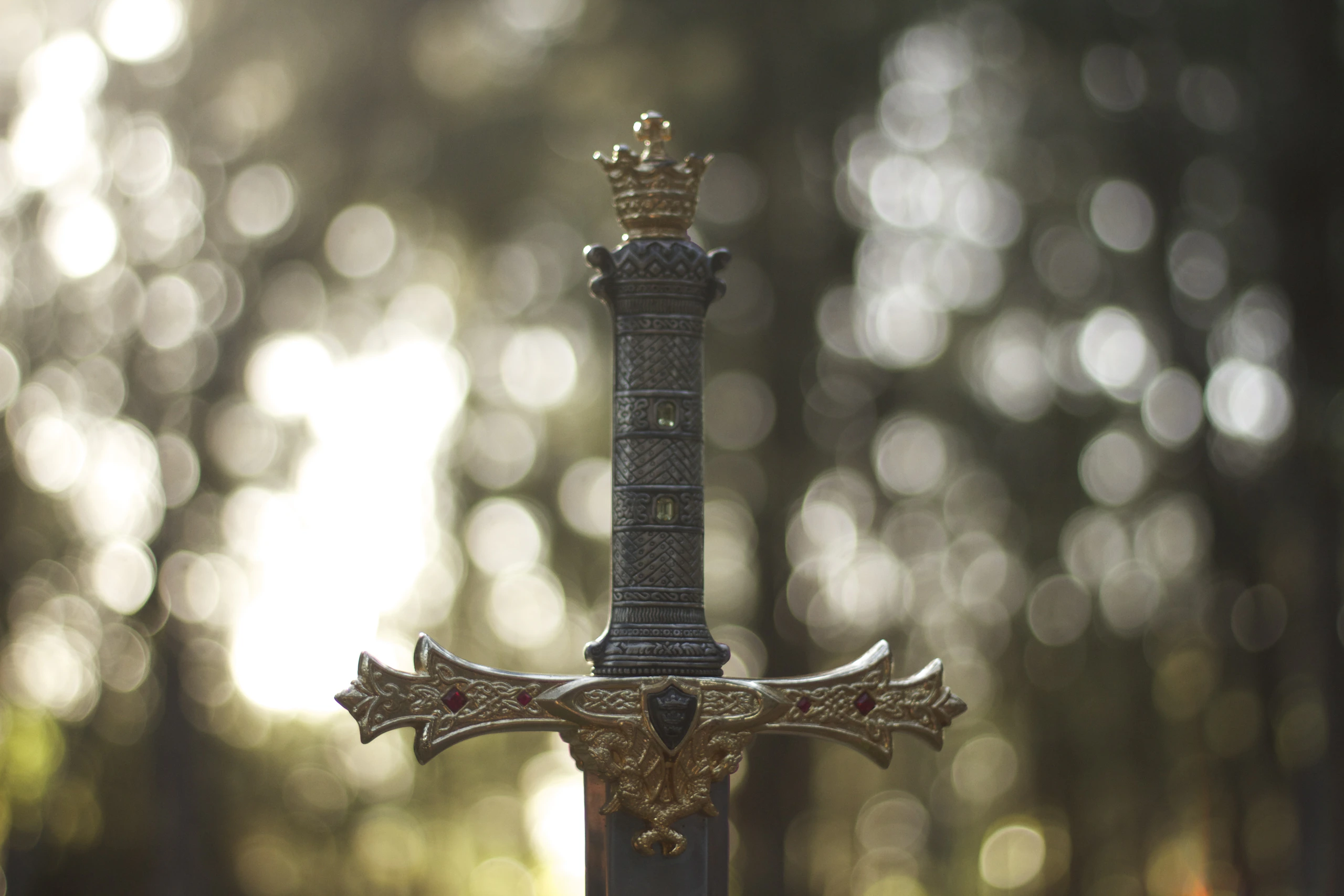
You have been training at the club for a month or two. You have held the loaner longsword, worked through your first guards and cuts, and the thought has begun to settle in your chest: I want one of my own.
This post is for that moment. A practical, honest guide to buying your first HEMA longsword. What the options are, what matters, what to avoid, and how not to spend £500 on the wrong thing because someone with beautiful Instagram photos told you to.
First, a Rule You Should Tape to Your Wall
Do not buy anything until you have trained for at least a month at a club.
We mean this. Every experienced HEMA practitioner has the same story: they bought a sword before they knew what they liked, and six months later they replaced it with something completely different. The sword you think you want before you start training is rarely the sword you will actually like once you have trained.
Use the club's loaners. Hold your instructor's sword, and any other members' swords they will let you hold. Feel the weight. Feel the balance. Ask about the flex. By the time you have trained for a month or two, you will have opinions of your own, and those opinions are what should guide your purchase. A sword bought before you have opinions is a sword that has to be lucky to suit you.
With that said, here are the categories.
The Three Categories of Training Sword
HEMA longswords come in three broad categories, and each exists for a different purpose. Understanding which one you actually need for your stage of training is half the purchase decision.
Nylon Synthetic Longswords
Price: £50 to £120. Best for: drills, cutting through the air, very light sparring in beginner classes.
A nylon longsword is a one-piece plastic blade with a steel or nylon crossguard, hilt, and pommel. The blade weighs roughly what a real feder weighs, but it is safer: it flexes enormously, it has no real edge, and it is forgiving when you make a mistake. Brands worth knowing: Black Fencer (excellent quality, popular in European HEMA), Rawlings (the classic entry-level synthetic), Pentti Longsword (great weight, well-regarded), Red Dragon (budget option, decent for starting).
If you are buying your first training weapon and you want it mainly for solo drills and slow-speed paired practice, a nylon synthetic is almost always the right answer. It costs less than your first steel feder will, it survives the inevitable bumps of a beginner's month with no damage, and it lets you start feeling the sword in your own hands without the pressure of a £300 purchase.
Most of us at HEMA Penzance still own a nylon, even after buying more serious kit. A nylon is the sword you hand to a curious friend at a party. It is the sword you take on holiday. It is the sword you can drill with in your living room without worrying about the ceiling.
Steel Feders
Price: £250 to £550. Best for: full-speed sparring in a club with protective gear.
A feder (from the German Feder, meaning "feather") is the proper HEMA sparring sword. Unlike a blunt sword, a feder has a flexible blade designed to bend safely on the thrust. The tip is flared into a little wing or "schilt" to prevent accidental penetration through mask mesh, and the blade's flex is calibrated to absorb the energy of a thrust without the tip slamming into your opponent like a spear.
This is the sword you will buy when you are ready to spar at full speed. Not before. Sparring with a feder requires full protective gear (mask, gorget, jacket, gloves, groin protection, forearms, elbows, knees, groin) and the drilled skill to cut and thrust without hurting your partner. No club will let you spar on night one, and no responsible practitioner should try.
Makers worth knowing, roughly in order of reputation:
- Regenyei (Hungary): the most popular feder in HEMA worldwide. Consistent quality, good price, fast turnaround. A Regenyei Standard or Regenyei Light is many fencers' first feder and still their best.
- Ensifer (Poland): excellent handling, slightly pricier, very popular with competitive sparrers.
- SGT Blades / Sigi Forge (Slovakia): high-end feders with meticulous balance. Worth saving for.
- Pavel Moc (Czech Republic): classic feders, beautifully made, heavier than some modern blades.
- Albion Maestro Line (USA): the premium option. Perfect balance, immaculate construction, long wait times.
- Comfort Fencing / Kvetun (Russia/Ukraine): reliable, popular in Eastern European HEMA.
What to look for when you are ready:
- Blade length: around 100-110 cm for a longsword feder. Longer gives you reach; shorter gives you handling speed. Start in the middle.
- Handle length: around 28-32 cm, enough for both hands with room between.
- Total weight: around 1.4-1.7 kg. Heavier feels "real" but tires you faster.
- Point of balance (POB): roughly 5-10 cm forward of the crossguard. Closer to the hand feels nimble; further forward feels weighty and committed.
- Flex: the single most important property. A feder that is too stiff will injure your opponent on the thrust; a feder that is too flexible will feel noodly and will not point reliably. Ask for a "medium flex" in your first feder. Your instructor can show you what good flex looks like.
Hold your club-mates' feders before you buy. What works for one body does not work for another.
Blunts and Cutting Swords
Price: £300 to £1200. Best for: specific purposes, not general training.
A blunt is a steel sword with edges that are not sharpened but a blade that does not have the feder's engineered flex. These are typically used for specific contexts: historical accuracy in drills, test-cutting with the back of the blade against tatami, heavier paired practice in certain schools. Blunts are harder to spar safely with, and for a beginner, a feder is almost always the better purchase.
A sharp is a real sword with a sharp edge, made for cutting water-filled tatami mats, pool noodles, or bamboo. Beautiful tools, essential for serious cutting practice, but absolutely not for paired training of any kind. Do not buy a sharp until you have a dedicated cutting space, a clear understanding of the safety, and a specific reason to own one. The famous cutting-sword makers are Albion, Arms and Armor, and Kingston Arms (Hanwei).
For your first HEMA longsword, neither a blunt nor a sharp is likely to be the right call. Cross them off your list for now.
What To Avoid
A few purchases that always disappoint:
- Stainless steel "wall hanger" swords from Amazon or eBay. These look like swords but are made for decoration. The steel is brittle, the hilt is not secured the way a real sword's is, and they can snap catastrophically under the kind of force HEMA training routinely generates. Broken stainless blades have injured people.
- Movie replica swords. Same category. Made for display, not for training.
- A katana instead of a longsword. Different weapon, different tradition. If Fiore's art is what you are training, a European longsword is what you need. A katana is a beautiful tool for Japanese sword arts but will not behave the way the manuscripts describe.
- Your dream sword as your first sword. You do not yet know what your dream sword feels like. Buy a reasonable first feder, train with it for a year, and let your next purchase be informed by what your body has learned.
The Three-Stage Pathway
For most beginners, the honest pathway looks like this:
Stage 1 (months 0-2): Use the club's loaner sword. Buy nothing.
Stage 2 (months 2-6): Buy a nylon synthetic longsword. Drill in your garden, your living room, your garage. Feel the weight become familiar.
Stage 3 (months 6-12+): Once you have your sparring kit and have started to spar at the club, buy your first steel feder. Hold your club-mates' feders, read reviews, ask your instructor, then commit to one reputable maker.
By the time you are a year into training, you will know more about what suits you than any article could tell you. Your second feder, if you ever buy one, will be much more informed than your first.
A Note on Cost
HEMA is not a cheap martial art. The full sparring kit (feder, mask, gorget, jacket, gloves, forearms, knees, groin, sometimes more) will cost £600-1000 if you build it carefully and potentially twice that if you buy everything premium. Spread across the year or two that you will be building it, this is manageable. All at once, it is daunting.
The good news: you do not need any of it to start. Your first nylon is £80 to £120. Your first session costs £7 and the first one is free. At HEMA Penzance, loaner gear is available throughout your beginner months. You will have many chances to hold a real feder before you buy one.
The Human Question
Beyond the metrics, there is the question only you can answer. What does a sword feel like in your hands? What do you want to train with twice a week for the next several years? Long or short? Heavy or nimble? Flexible or firm?
The honest answer is that you cannot know until you have trained for a while. That is the whole reason for the first rule: do not buy before you train. A month of drilling with loaner swords teaches your body things that hours of YouTube research never will.
Once you have trained, your hands will know. Listen to them.
Come and Learn
HEMA Penzance provides loaner swords to every beginner, and we are happy to talk through your kit decisions as you approach them. We train every Tuesday evening at Penzance Leisure Centre, 7pm to 9pm. Your first lesson is free, all equipment is provided, and no experience is necessary. Come along and see for yourself.