The sabre has a reputation as a slashing cavalry weapon, and people tend to picture something heavy enough to take a head off. The real thing is lighter than most people guess, and there are three quite different sabres hiding under the one word.
Military Sabres
A historical military sabre usually weighs between 0.9 and 1.3 kilograms, about 2 to 3 pounds. The famous British 1796 Light Cavalry Sabre sits just over a kilogram in its fighting trim. Nineteenth-century infantry officers' sabres were often lighter, some well under a kilogram.
The Polish szabla, the sabre of the Polish-Lithuanian Commonwealth, is in the same range. The hussar sabres of the seventeenth century, with their closed hilts, and the lighter karabela that noblemen wore with their everyday dress, generally weigh around a kilogram.
So a proper war sabre weighs about the same as an arming sword, and less than a longsword.
Sport Fencing Sabres
The Olympic fencing sabre is a very different object. Its maximum permitted weight is 500 grams, and most weigh less. The blade is thin and flexible, because in sport fencing the aim is to touch, not to cut, and a light blade is faster.
That lightness changes how you fence. A blade that weighs almost nothing can arrive everywhere at once, so timing tricks that work with a real sword, like changing the speed of your attack to catch your opponent adapting, barely exist.
HEMA Sabres
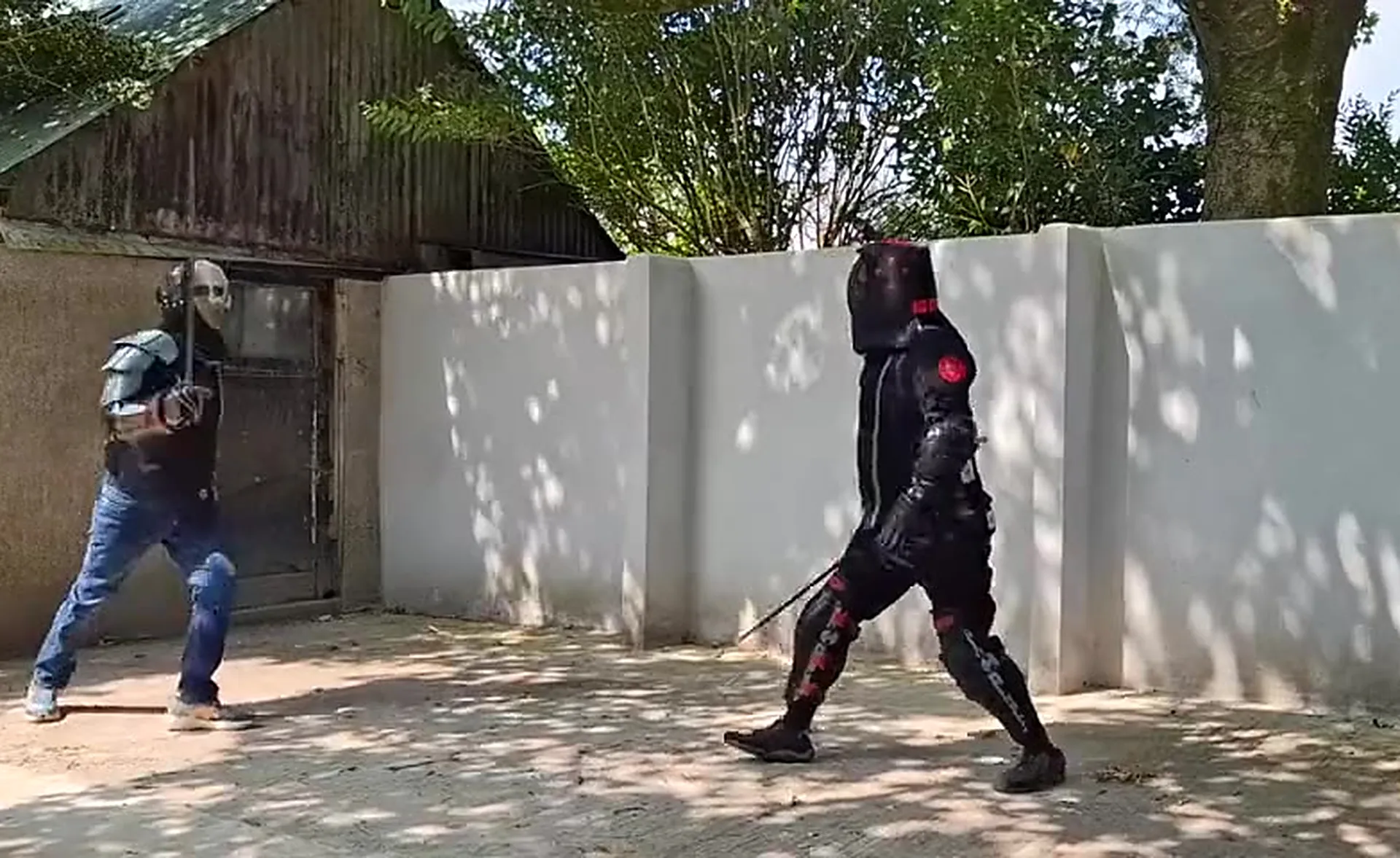
Historical fencers train with steel sabres that sit between the two: heavier and stiffer than a sport sabre, lighter and safer than a sharp military one, with a rounded tip and a blade that flexes on the thrust. They handle much more like the real thing, and that is the point. The techniques in the old manuals only make sense with a blade that has some mass.
Why a Light Sabre Cuts So Well
This is the bit that surprises people. A sabre does not need weight to cut, because it is curved and because of how cutting works.
When a blade is pushed straight down into something, it needs a lot of force. When it is drawn along as it goes in, the force needed drops dramatically. A curved blade does that drawing motion by its own shape as it passes through a target. That is why a light sabre could do such serious damage, and why the old cavalry manuals kept telling soldiers to cut with speed rather than strength.
It also explains why sabre cuts are made largely from the wrist and the tip. The tip is the fastest-moving part of the blade. A big heavy swing from the shoulder is slower, easier to see coming and easier to hit on the way in.
A Kilogram in the Hand
Weight on paper tells you very little. A kilogram sabre held by someone who knows it feels like part of the arm. If you would like to feel the difference between a longsword and a sabre for yourself, HEMA Penzance meets every Tuesday in Penzance, and your first lesson is free.