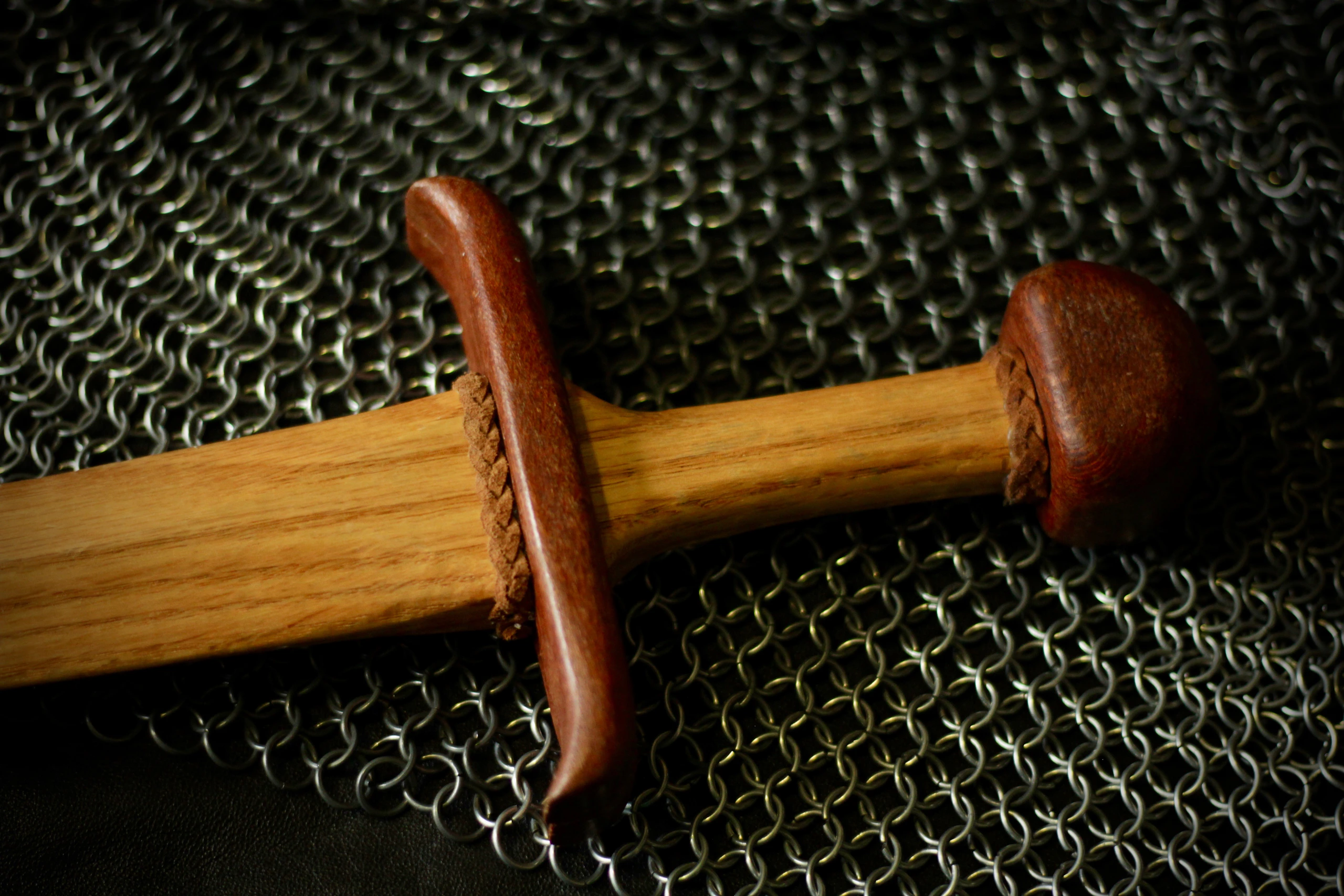
Modern HEMA is a longsword world. Most training hours, most tournaments, most manuscripts read and argued over online focus on the two-handed weapon. But when Fiore dei Liberi wrote Fior di Battaglia, he did not think of the two-handed longsword as the only sword worth teaching. Before he gives you sword in two hands, he gives you a shorter but equally deliberate section: the spada a una mano, the sword in one hand.
Only eleven plays long, this section is easy to skim past on the way to the more famous material. That would be a mistake. The one-handed sword teaches you something the two-handed sword cannot, and the plays carry direct implications for the way you fight with any weapon.
What the Section Covers
Fiore's spada a una mano section opens with a master who has decided to fight with one hand on the grip and his other hand free. It is not clear from the text whether he has lost the use of the other hand, or is holding a cloak, or has dropped something, or is simply demonstrating a technical point. What is clear is that the master faces a series of attackers committing full cuts and thrusts, and defeats each of them using the same core mechanic.
That mechanic is a single rising deflection, executed with one hand, that clears the incoming blade and immediately resolves into a striking, binding, or disarming follow-up. The master rotates his sword up and across, using the strength of his forearm and the edge alignment of his blade to catch the attack at an angle. Once the attack is redirected, his free hand comes into play: grabbing the opponent's weapon, grabbing their arm, throwing them, or pinning their blade while his own sword finishes the work.
Eleven plays later, the master has demonstrated that the same logic the longsword uses at two-handed distance can be compressed into one hand, one sword, and one free grabbing hand. The art is the same. The instrument has just become simpler.
Why One-Handed Matters
Three reasons, historical and practical.
Medieval life did not always hand you a longsword. Fighters of Fiore's world carried arming swords, sideswords, falchions, and messers every day. The one-handed weapon was the everyday sword, the sword on your hip while you walked to market. When a fight broke out, you drew what you had. Fiore's one-handed section trains exactly this situation: the shorter weapon, used efficiently, with one hand doing the fencing work and the other hand free to grab, grapple, or throw.
Two-handed swords sometimes become one-handed swords. In a real fight, anything can happen. Your off hand gets injured. Your cloak tangles the grip. You need to fend off a grabbing opponent while your sword keeps working. The one-handed section teaches your primary sword hand to operate independently, which means that if your off hand is ever unavailable, your fencing does not collapse.
The free hand is a weapon of its own. This is Fiore's deepest point in the one-handed section. When only one hand holds the sword, the other hand is free to enter the fight directly. It can grab your opponent's blade, hand, or arm. It can punch, push, or hook. It can lock a joint or throw. This is where the section connects most clearly to abrazare, Fiore's grappling. With one hand on the sword and one hand free, you are simultaneously fencing and wrestling. Most modern HEMA practitioners who spend time with the one-handed section report that it sharpens their awareness of what the off hand could be doing in every fight, even two-handed ones.
The Same Principles, Compressed
What is remarkable about the one-handed section is how consistent it remains with the rest of Fiore's art. The same principles that govern two-handed longsword, dagger, pollaxe, and spear appear here in smaller form.
Measure still decides who wins the exchange. The master picks the moment to strike based on how far the opponent's blade has travelled, the same way he would with two hands.
The covering blade still creates the structure that lets the counter-attack work. The rising deflection of the one-handed sword is the same principle as the rising parry from Porta di Ferro, the Iron Door, with the two-handed sword.
The step offline still resolves what would otherwise be a straight-line exchange. The master does not meet the attack dead-on; he angles his feet so that the opponent's weapon passes beside him while his own blade finds the new line.
The finish often involves grappling. Many of the one-handed plays end with a throw or a disarm, and the disarm uses the free hand to seize the opponent's weapon while the sword pins their body. This is the same narrow play logic that appears in the two-handed section, just executed with one hand on the blade.
In short: if you have absorbed armizare through the longsword, the one-handed sword reveals itself quickly. The art is the same. The specific tool has changed.
The Grappling Connection
Several of the plays in the one-handed section deserve a special note because they bridge explicitly into the grappling material. The master disarms his opponent with a circular rotation of his own blade that traps the attacker's sword against their own body, then uses the free hand to strip the weapon away and throw the disarmed opponent to the ground.
This is, mechanically, the same movement as plays in Fiore's abrazare section, only now with a sword involved. It confirms Fiore's integrated approach: the sword hand does what the sword hand does, the free hand does what the free hand does, and together they cover the full range from distance fighting to clinch finishing.
A modern Fiore practitioner who has trained both the one-handed sword and the grappling section starts to see each of those arts inside the longsword. The two-handed sword is not a different art from wrestling. It is wrestling with a long tool involved, and when one hand leaves the grip (as it does in half-swording, for instance), the tool-plus-wrestling logic comes right back to the surface.
The Shorter Weapon of Fiore's World
The one-handed sword of Fiore's time was typically an arming sword: a straight double-edged blade of around 70 to 85 centimetres, with a crossguard and a single-hand grip. Total weight around 1 to 1.3 kilograms. Point of balance usually a hand's breadth from the crossguard.
These are not the rapiers or smallswords of later centuries, which specialised in thrusting. An arming sword is a cutting and thrusting weapon in roughly equal measure, the everyday sidearm of a fourteenth-century knight. When Fiore shows plays with the sword in one hand, he is showing you how to use the weapon on your hip, not a specialised duelling tool.
Modern HEMA training for the one-handed sword uses either nylon arming swords or steel trainers of similar dimensions. The handling is noticeably different from a longsword: faster in the hand, shorter in the reach, and with no second-hand leverage available for binding work. Everything the blade does, the forearm does. It is a workout for the hand and the wrist in ways that two-handed work is not.
What to Make of It Today
Most HEMA clubs do not train the one-handed section regularly. It is a smaller part of the manuscript, it competes for training time with the richer two-handed material, and it is harder to spar with because one-handed swords land closer to the opponent's fingers and a missed parry can do real damage.
But reading the section and occasionally drilling its plays is worth the time for any serious Fiore student. It teaches you things about the free hand, about measure at shorter range, and about the fundamental unity of Fiore's art that the two-handed section alone does not emphasise.
At HEMA Penzance we return to the one-handed sword from time to time, usually after a period of intense two-handed training, to remind ourselves that the core of the system is not the longsword specifically. It is the set of principles that let any sword, in any hand, executed with enough understanding, hold its own against any opponent.
Fiore understood this. That is why he put the one-handed section where he did, early in the sword material, before the two-handed plays. He wanted you to see the principles in their simplest form first. The longsword is then the same principles, with more reach and more leverage. But the art was already complete when only one hand held the blade.
Come and Learn
We practise Fiore's complete system every Tuesday evening at Penzance Leisure Centre, 7pm to 9pm. Your first lesson is free, all equipment is provided, and no experience is necessary. Come along and see for yourself.
Fiore's words in this article are from the Getty manuscript translations at Fight Like Fiore.