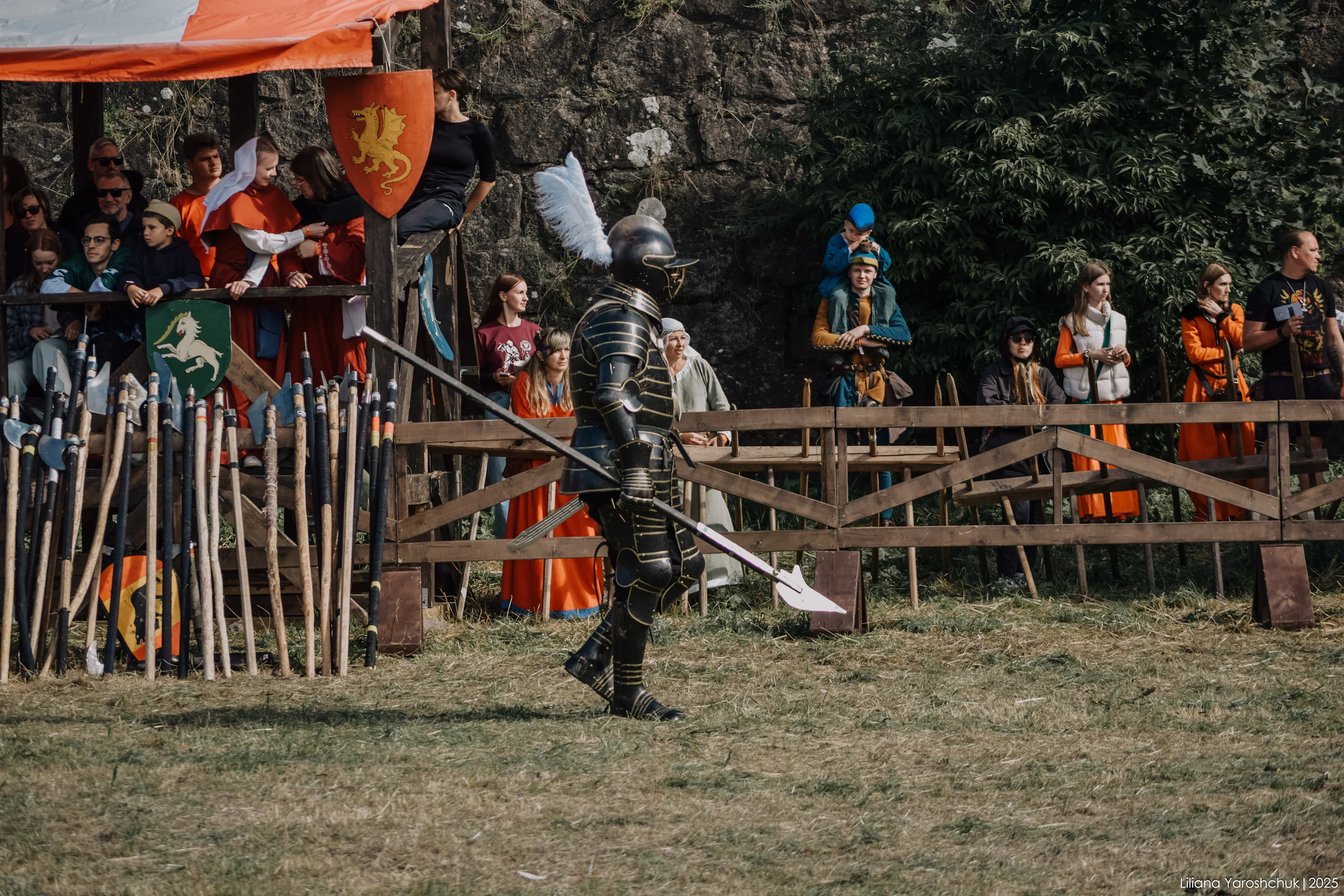
Most people who try HEMA do not come to it for fitness. They come for the history, the manuscripts, the strangeness of holding a medieval weapon, the particular intellectual appeal of reconstructing a six-hundred-year-old martial art. The fitness is a side effect.
Then, a year in, they notice something. Their shoulders have changed shape. Their stamina has improved. Their resting heart rate has dropped. Their posture is better. Their forearms are suddenly visible in a way they were not before.
HEMA, it turns out, is a surprisingly effective physical discipline. Not in the intense-CrossFit sense, but in the steady, whole-body way that old manual trades and outdoor work used to build fitness incidentally. This post is about what HEMA actually does for your body, and why the fitness effects of regular longsword training are worth understanding even if they are not what brought you to the art.
The Demands of a Typical Session
A typical HEMA evening at HEMA Penzance runs two hours. Inside those two hours, your body is asked to do a specific set of things, in varying proportions:
Stand in ready postures for extended periods. Holding the sword in a guard (for example, Posta di Donna chambered over your shoulder, or Posta Longa extended forward) is an isometric exercise. You are holding weight out against gravity while standing in a lunge-like stance. Five minutes of this starts to tire your shoulders and legs.
Execute passing steps. Fiore's footwork involves stepping with one foot passing the other, like a slow deliberate walk, driven from the hips. Each passing step engages your legs and core.
Deliver controlled cuts. A fendente from Posta di Donna to a target about a metre in front of you involves rotating your hips, transferring weight, extending your arms, and stopping the blade precisely on target. Not maximum-effort, but a coordinated whole-body movement.
Pair up for paired drills. You repeat a technique with a partner, taking turns attacking and defending. Each repetition involves multiple steps, a guard transition, a cut or thrust, and a recovery. Over an hour of drilling, you accumulate hundreds of these.
Spar, if you have your kit. Full-speed sparring, once you are ready for it, is one of the more cardiovascularly intense things you can do while holding a sword. Ten minutes of continuous sparring will leave a fit person breathing heavily; a full sparring evening will leave them genuinely tired.
What This Builds
Those demands, repeated over weeks and months, produce specific fitness adaptations.
Shoulder and Back Strength
The repeated action of holding a longsword in guard, cutting with it, and recovering works your shoulders, upper back, and lats in ways that most modern lives neglect. Office work tends to pull shoulders forward and round them; HEMA pulls them back and squares them. Over six months of regular training, most practitioners notice their upper back strengthening visibly.
This is particularly valuable for anyone whose day job involves sitting at a desk. HEMA is one of the more specifically-counterbalanced activities you can do against the postural damage of office work.
Core Stability
Every guard transition, every cut, every passing step requires the core to stabilise the movement. You are not doing crunches (HEMA is not ab-focused), but you are constantly engaging the deep stabiliser muscles that modern fitness culture calls "the core." Over time this manifests as better balance, better stability in other activities, and the quiet unglamorous strength that makes daily movement feel easier.
Cardiovascular Conditioning
This one depends on how much you spar. Drill-focused training is moderate cardio; sparring is more intense. A HEMA practitioner who spars regularly will see measurable improvements in resting heart rate and VO₂ equivalent within a few months.
HEMA cardio is also structured in a way that feels different from generic running or cycling. You are breathing in response to combat demands, pacing yourself for a multi-minute exchange, recovering between bouts. The cardio is interval-style and pattern-rich, closer to how the human body evolved to work than steady-state treadmill time.
Forearm and Grip Strength
Holding a longsword, gripping it through cuts and parries, and managing its balance trains your forearms and grip in a specific way. Grip strength is one of the better-documented markers of overall health and longevity, and HEMA trains it incidentally, two hours a week, without dedicated grip work.
Coordination and Proprioception
Perhaps the most underrated fitness benefit of HEMA. Your nervous system learns to track a 1.5-kg weapon extending about a metre from your hands, against an opponent doing the same, while your feet move independently. This is a rare neuromotor challenge.
Most martial arts train coordination, but HEMA's long weapon and paired-partner work develops specific spatial awareness that generalises to other activities. Many practitioners report improved balance, better handwriting, easier driving, and smoother general movement after a year or two of training.
Joint Health
Moderate, varied, full-range-of-motion movement is excellent for joint health in adults. HEMA provides exactly this: regular controlled use of shoulders, elbows, wrists, hips, and knees, all within safe ranges, against low-to-moderate resistance. Joints stay mobile because they are being moved.
Older HEMA practitioners often note that their joints feel better after regular training than they did before starting. This is unusual for a martial art (many strike-heavy arts are hard on knees and wrists over time) and is one of HEMA's quiet long-term gifts.
What It Does Not Build
Fair balance: HEMA is not a complete fitness programme by itself.
Maximum strength. Your one-rep max in the gym will not improve much from HEMA alone. For strength-specific goals, add dedicated resistance work.
Running endurance. HEMA cardio is interval-style; if you want to run a marathon, you need to run.
Aesthetic physique. HEMA will change your body shape but not according to gym-culture beauty ideals. Your shoulders will broaden; your forearms will thicken; your posture will straighten. This may or may not match the look you are aiming for.
For most adults, HEMA plus basic supplementary work (some walking, some bodyweight exercise, some flexibility work) covers the full fitness picture. As a single weekly activity, it punches well above its weight.
The Sleep and Stress Effects
Two under-discussed benefits that nearly every HEMA practitioner notices.
Sleep. Two hours of physical training on a Tuesday evening reliably produces good sleep on Tuesday night. This is true of most exercise, but there is something specific about HEMA's combination of physical effort, mental focus, and social time that seems to regulate sleep particularly well for many practitioners.
Stress. The specific mental state of focused paired drilling (full attention on your partner, your sword, and the immediate exchange) is effectively a form of meditation in motion. Many members describe HEMA as "the thing that resets my head for the week." Worries about work and life fade for two hours in a way that is hard to replicate in other activities.
These are the quieter fitness benefits, and for many adult practitioners they end up being the most valuable ones.
A Caveat About Injury
HEMA is not risk-free. The main injury risks are:
Overuse injuries from poor technique. The most common is a strained rotator cuff or elbow tendinitis from forcing cuts without proper body mechanics. Good instruction prevents most of this.
Hand injuries during sparring. The hands take a lot of hits in sparring, and even with good HEMA gloves you will occasionally get a bruised finger. Broken fingers are rare but happen; good gloves and careful partner selection minimise the risk.
Occasional knocks and bruises. Paired training sometimes produces unintended contact. This is why you drill slowly early, and why sparring demands full kit.
None of these should deter an adult beginner. HEMA has a much lower injury rate than contact sports like rugby, football, or even recreational tennis. But it is worth being clear that it is a martial art, not yoga.
The Long View
If you train HEMA regularly for a decade, your body will be different at the end than it was at the start. Better posture, better stamina, better coordination, better shoulder and core strength, better resistance to the various slow drifts of adult physical life. Your joints will be in better shape than sedentary equivalents, and probably in better shape than they would be from some other martial arts.
This is a quiet long-term return on what feels like a fun Tuesday-evening hobby. The fitness is not the point, but it turns up anyway, and it compounds over years in ways that make a real difference.
Come and Start
HEMA Penzance trains every Tuesday evening at Penzance Leisure Centre, 7pm to 9pm. Your first lesson is free, all equipment is provided, and no experience is necessary. Come along and see for yourself.