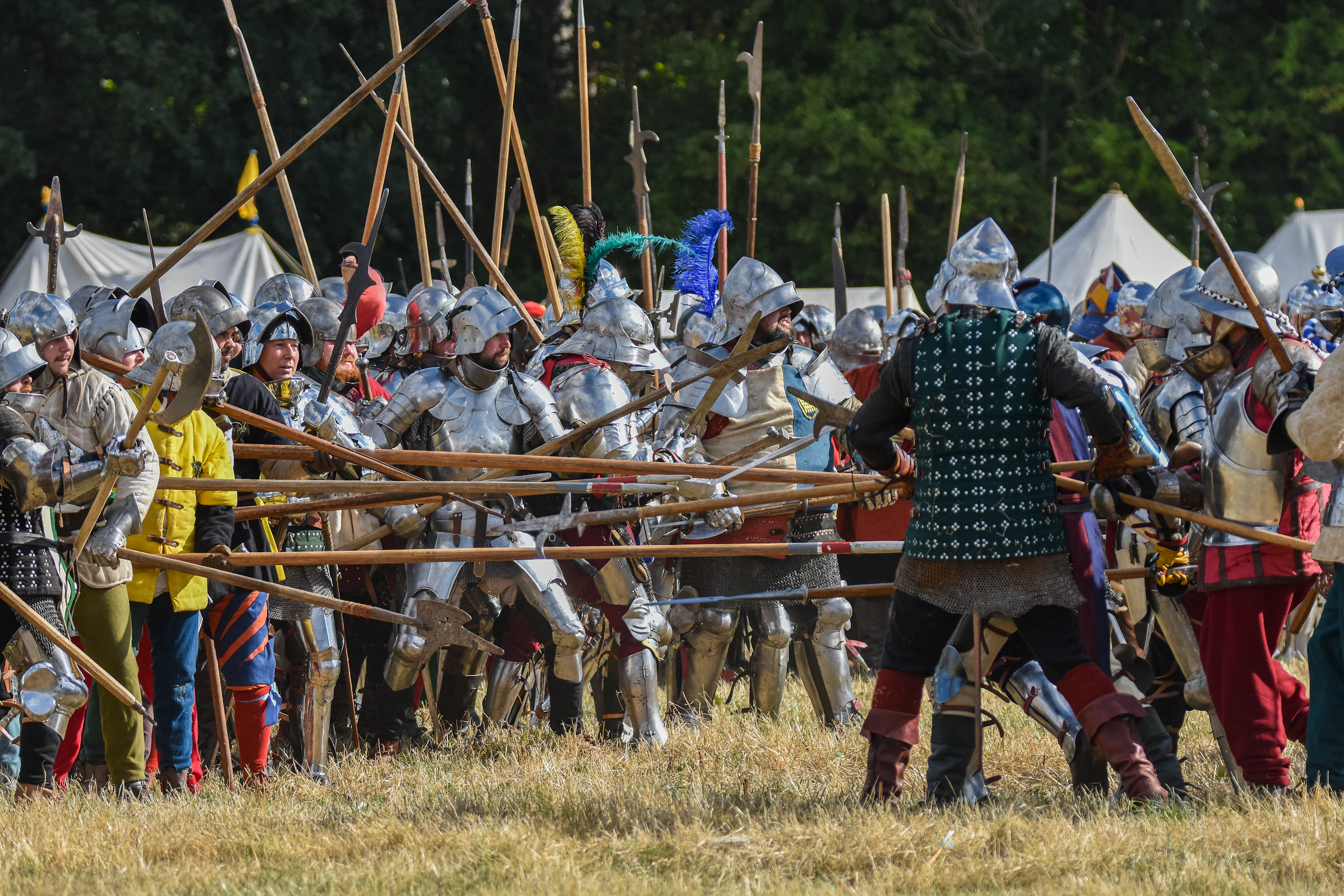
A quiet fact about Historical European Martial Arts: most people who start it are adults. Most of them are not athletes. Many of them are returning to physical training after years or decades away. Some of them are starting their first martial art in their forties, fifties, or later.
This makes HEMA an unusual corner of the martial arts world, and a welcoming one. If you are an adult thinking about starting a martial art for the first time, or returning to movement after a long pause, or picking up a new activity mid-life, this post is for you.
Who Actually Trains HEMA
Walk into a HEMA class anywhere in the world and the room does not look like a stereotypical martial arts dojo. You will not see rows of teenagers in matching uniforms. You will see:
- A software developer in their thirties who has wanted to do this since they were eight.
- A schoolteacher in their forties who started three years ago and is now sparring competitively.
- A grandparent in their sixties who comes for the drill work and the community.
- A university student in their twenties who reads medieval manuscripts for fun.
- A small-business owner in their fifties recovering their sense of physical presence after a career behind a desk.
The age range is typically 20 to 60+, with a median probably in the mid-thirties. The gender mix varies by club but leans male slightly; HEMA is one of the more gender-diverse martial arts communities, partly because its techniques rely on timing and leverage rather than raw strength.
At HEMA Penzance our members span this full range. The art is genuinely welcoming to adults across ages, backgrounds, and fitness levels.
Why HEMA Works for Adults
A few specific reasons HEMA suits late-starters well.
The techniques depend on leverage, not strength. Fiore dei Liberi's abrazare principles, which run through his whole system, work on the geometry of joints and the physics of fulcrums, not on who is stronger. A sixty-year-old with good technique regularly defeats a twenty-five-year-old athlete in drill work. The system rewards understanding, not raw power.
The learning curve is gentle. Most adult beginners find they can hold their own in drilling within a few weeks, and can learn meaningful technique across their first year. HEMA is technical enough that there is always more to learn, but the floor is accessible.
The pace is your own. Nobody is going to force you to spar before you are ready, and most beginners drill happily for months or even years before stepping into freeplay. You set your own intensity.
The intellectual depth is genuine. HEMA rewards the kind of patient textual and historical curiosity that many adults have developed over the years. Reading the manuscripts, understanding the historical context, and debating interpretations is as much a part of the practice as the physical training.
The community is adult. Unlike martial arts with heavy youth programmes, HEMA is mostly adult-to-adult training. The conversation in the club before and after sessions tends to be about the manuscripts, the history, the last tournament, or general life, rather than about gradings and belt exams.
What Fitness Level You Need
The honest answer is: less than you think.
You need to be able to stand on your feet for two hours with occasional breaks. You need to be able to bend, twist, and extend your arms without pain. You need to have full use of both shoulders (the sword is a two-handed weapon). Beyond that, most fitness levels can start HEMA and build from there.
You do not need to be athletic. You do not need to run regularly. You do not need to be able to do pull-ups. You do not need a flat stomach. HEMA is not a strength-based martial art, and many excellent HEMA fencers carry body types that other martial arts would consider unsuitable.
What helps over time:
- Cardio. Sparring in full kit gets your heart rate up. Any background cardio (walking, swimming, cycling) helps your stamina in the second hour.
- Shoulder flexibility. Holding the sword in guard over your shoulder works muscles most office jobs neglect. Gentle shoulder mobility work pays dividends.
- Leg strength. Passing steps, lunges, and stable stances demand legs. Regular walking is usually enough; resistance work helps more.
- Wrist and forearm conditioning. The sword is not heavy, but holding one for two hours trains your forearms in new ways. This builds naturally with training.
If you have a specific injury or chronic condition, talk to your instructor in your first session. Most clubs can adapt drills and will train you within your safe range.
The Common Concerns
"I'm too old." You are not. HEMA has active practitioners in their sixties and seventies. Fiore himself claimed to have trained the art for over forty years by the time he wrote his manuscript, meaning he was probably training into his late sixties at minimum. Age is less limiting than you imagine.
"I'm too out of shape." HEMA is a route back into shape, not a destination for the already-fit. Most beginners find they gain stamina and strength naturally over the first six months simply from regular training. You do not need to "get fit first."
"I'm not coordinated." Coordination is a skill like any other, and HEMA trains it. People who describe themselves as "clumsy" often discover within a few months that they have more precision in their hands than they realised, once they have something specific to focus on.
"I've never done a martial art before." Perfect. HEMA welcomes complete beginners, and the lack of prior habits can actually help. You will not have other martial arts' muscle memory to unlearn.
"I'm not sure I want to get hit." You will not get hit for a long time. Sparring requires full protective gear and happens only after months of drill work. If you never want to spar, most clubs will let you drill indefinitely without pressure to step up.
What the First Month Actually Feels Like
A typical adult beginner's first month at a HEMA club:
Week 1. You arrive nervous. You borrow a training sword. You learn a basic guard and a basic cut. Your shoulders ache afterwards. You leave feeling quietly elated.
Week 2. You remember the guard from last week. You learn a cover and a counter. The sword feels slightly less alien in your hands. Your shoulders ache less.
Week 3. You practise paired drills with another member. You make mistakes, get corrected, make them less often. You start to recognise other guards being demonstrated. The word fendente means something to you.
Week 4. You have two guards and three cuts in your body. You can move between them without thinking about every step. You start to feel the rhythm of the training hour. You commit to coming back next week.
That is roughly the pattern. Each subsequent month builds on the previous one at a slower, deeper rate, and by six months you are a meaningfully different fencer than you were at the start.
The Unexpected Benefits
Adult beginners frequently report benefits beyond the martial art itself.
Posture improves. Holding a sword in guard requires engaging your core, squaring your shoulders, and lifting your chest. This transfers to sitting and standing in daily life.
Sleep improves. Two hours of physical training on a Tuesday evening has the reliable effect of knocking you out on Tuesday night. HEMA is one of the better aids to adult insomnia we know.
Focus improves. Learning and executing a technical sequence demands a specific kind of concentration that is hard to get from most office work or entertainment. Many practitioners describe HEMA as "meditative" in a way they did not expect.
Friendships form. The weekly-fixture nature of HEMA training builds genuine friendships over the years. You train with the same people, drink tea with them afterwards, travel with them to tournaments. It is a real community.
History comes alive. Reading Fiore's manuscript and training his plays gives you a concrete relationship with medieval history that purely academic study rarely provides. The past becomes a place your body has visited.
The One Honest Caveat
HEMA is not magic. Regular training still requires showing up regularly, and that is the hardest part for most adults. A club that meets Tuesday evenings asks for a Tuesday-evening commitment week after week. The members who progress are the ones who protect that slot from work drift, family obligations, and the general inertia of adult life.
Most people who commit to one regular evening a week for a year see genuine change. Most people who attend irregularly do not. This is not specific to HEMA; it is true of almost any weekly discipline. But it is worth knowing as you start.
Come and Start
If medieval European martial arts and the Italian tradition of Fiore dei Liberi sound interesting, HEMA Penzance trains every Tuesday evening at Penzance Leisure Centre, 7pm to 9pm. Your first lesson is free, all equipment is provided, and no experience is necessary. Adults of any age and fitness level are warmly welcomed. Come along and see for yourself.
If you live elsewhere, the HEMA Alliance club finder will help you find a club near you. Walk in as you are. The art does not require you to be anyone else first.